

Could abandoned coal mines in Glasgow support the UK net zero ambitions?
The UK Geoenergy Observatory will allow scientists to better understand the processes and impacts of using warm water underneath UK cities as a sustainable heat source
27/05/2021 By BGS Press

Should you take a (virtual) trip upstream of the River Clyde from the location of COP26, at Glasgow Scottish Event Campus (SEC), after several large meanders and 8 km you will arrive at the Cuningar Loop Woodland Park.
The park is part of a programme of regeneration in eastern Glasgow and also at the heart of a promising new story to better understand how our industrial heritage could be transformed into a cleaner and more sustainable energy future for UK towns and cities.
Between 1850 and 1930 numerous coal mines and other industry dotted this area of Rutherglen and Glasgow city. Today, an underground observatory of boreholes, sensors and monitoring equipment targets those former, flooded coal mines. The mines which once gave birth to an industrial revolution driven by fossil fuels, could now provide access to a low carbon, clean energy heat source in the years to come.
Data from this UK Geoenergy Observatory will allow us to better understand β€˜mine water geothermal’ energy as a sustainable, low carbon heat source and store. With many homes and business located on coalfields, this technology could provide decarbonised heat for significant number of buildings, as has already been demonstrated at a small number of schemes in England, Wales and Scotland.

An overview of a research compound at the Glasgow UK Geoenergy Observatory. Β© BAM Nuttall (background); BGS Β© 51ΑΤΖζ (labels).
Scientists will use the Glasgow Observatory to better understand the processes and impacts of using warm water from these abandoned mines beneath UK towns and cities to provide a sustainable heat source. Whether supplying to a single building or via a district heating network, each could contribute to reducing CO2 emissions and meeting net zero targets.
Cost and technical uncertainties remain barriers to the widespread rollout of mine water energy, along with economic, regulatory and awareness challenges. Research on chemical, biological and physical change, reducing risks on finding a sustainable heat resource and how efficiently we can transfer heat energy, for example, will all help overcome the cost and technical challenges. The Observatory is also a place for training and awareness raising for a more sustainable economy, potentially supporting future jobs in decarbonised heat technologies.
With a wide range of monitoring, ongoing environmental change and any impacts from heat abstraction or storage can be comprehensively assessed at the observatory. As a flexible, at-scale infrastructure the observatory is a place to test new equipment and techniques for mine water energy schemes.
As Science Lead for the Glasgow Observatory it has been exciting to see the construction of instrumented boreholes and the growing body of starting to come through.
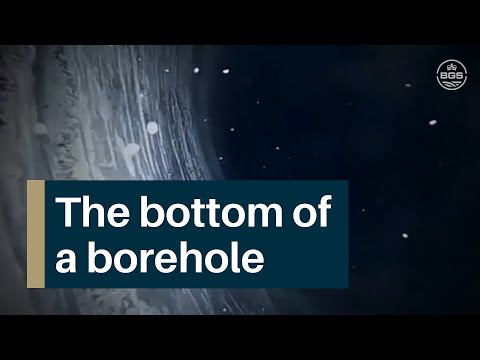

Journey 90 m below the surface of Glasgow, where historic mine workings now support research into sustainable use of mine water for heat and energy storage. BGS Β© 51ΑΤΖζ
Whilst some activities have been on pause due to Covid restrictions, we hope that multi-disciplinary teams spanning geoscience, environmental science and geo-engineering will be using the infrastructure soon.
Taken together with the planned Cheshire Observatory that will focus on energy storage, heating and cooling in a sandstone aquifer, and the established Cardiff Urban Geo Observatory that focuses on shallow ground source heat at city scale, these infrastructures will inform how β€˜geoenergy’ can help to deliver decarbonised heat and clean growth.
Preparations are underway to work closely with partners such as the Glasgow Science Centre to deliver a public engagement programme around geoenergy and the β€˜underground laboratoriesβ€˜. Targeted at a range of audiences, this will ensure the aims and discoveries at these publicly-funded research facilities are widely shared.
The Glasgow Observatory has been funded by the UK Government Plan for Growth Science & Innovation and commissioned by 51ΑΤΖζ-NERC and is being run by the 51ΑΤΖζ.
COP26
In November 2021, the UK will host the 26th UN Climate Change Conference of theParties (COP26) in Glasgow.BGS will join 51ΑΤΖζ and NERC colleagues to highlighttheUK role in climate action, playa key role in net zero discussions,alongsideclean growth,and demonstrate where UK geoscientific research and innovationcan assist emerging climate action.
- Find out more about our Geoscience solutions for net zero
°Υ³σ±πΜύwill provide researchers with real-world test environments for the evaluation of low-carbon subsurface energy technologies. While the primary focus of the facilities is aquifer and mine water geothermal, the knowledge they provide on subsurface processes and monitoring will be relevant to a wide range of other technologies including hydrogen storage, carbon capture and storage, and other energy storage solutions for wind, solar and tidal energy.
Latest blogs

Measuring the environmental impacts of carbon fibre: life cycle assessment
01/09/2026
Undergraduate student Phoebe Brown visited BGS to understand the life cycle of carbon fibre, from primary production to recycling.

Experiences from our Commonwealth Fellowship at the 51ΑΤΖζ
24/08/2026
Scientific fellowships foster professional growth, international collaboration and exposure to world-class research environments. A group of visiting Commonwealth Fellowship researchers share their experience of being hosted at the BGS Inorganic Geochemistry Facility.

Coastal retreat in the past: the legacy of truncated drumlins
07/08/2026
The UK’s coasts have been responding to changing sea levels for thousands of years, but some of the best evidence of those changes now lies hidden beneath the waves.

51ΑΤΖζ strengthens scientific links with Icelandic partners through Research and Innovation Scotland initiative
06/08/2026
51ΑΤΖζ researchers recently visited Iceland as part of a project developing international partnerships and identifying opportunities for future collaborative research.

Building Europe geological future
20/07/2026
51ΑΤΖζ scientists are contributing to a continent-wide initiative that is strengthening collaboration across borders to tackle shared subsurface challenges and unlock new opportunities.

Collecting beach pebbles: fun hobby but is it legal?
14/07/2026
The UK coastline will be inundated with keen holidaymakers this summer, many of whom will take a memento of their trip home in the shape of a pebble or two β€” but is it legal?

Strengthening capacity through partnership: a critical minerals perspective
28/04/2026
51ΑΤΖζ has been working in partnership with the Geological Survey Department of Zambia (GSD) to build national capacity, improve data accessibility and support long-term, sustainable development.

PhD adventures in Copenhagen, Denmark: revealing pastrecovery processesof tropical forest systemsthrough ancient environmental DNA
12/03/2026
PhD student Chris Bengt visited the University of Copenhagen to carry out very delicate extraction of aeDNA from lake-sediment cores, in the hopes of unlocking the secrets of past volcanic eruptions.

MARC Conference 2025: highlighting the importance of conferences to PhD students
16/02/2026
51ΑΤΖζ and University of Nottingham PhD student Paulina Baranowska shares her experience presenting her research on nuclear forensics at her first international conference.

Hole-y c*@p! How bat excrement is sculpting Borneo hidden caves
23/12/2025
BGS researchers have delved into Borneo underworld to learn more about how guano deposited by bats and cave-dwelling birds is shaping the subsurface.

How the geology on our doorstep can help inform offshore infrastructure design
19/11/2025
51ΑΤΖζ is part of a new collaboration using onshore field work to contextualise offshore data and update baseline geological models which can inform the sustainable use of marine resources.

Fieldwork on VolcΓ‘n de Fuego
13/10/2025
Understanding how one of the world most active volcanoes builds up material, and how they collapse to feed hot flows